Monday, 18 February 2013
Map to 'My Guys'
View Royal Oak Burial Park Sections B and G in a larger map Here is the Google map we created of some of the military burials in Royal Oak Burial Park. If you want to visit my guys you can check out where they reside in Section B of the park. You Can also find links to all the photographs that featured in my last post.

I will remember you
 As part of a class project we were required to conduct data
collection in a cemetery. I admit as I drove to the cemetery on the day we had
selected for our fieldwork I was all business; get in get out approach. I had a
ton of school work to get done that weekend and I wanted to get the fieldwork
done quickly so I could get started on the essay portion of the project. As our
group trudged into the cemetery, notebooks and cameras in hand, there was a
distinct feeling of uneasiness that settled over us. I felt that I was somehow
trespassing on the people buried there, that somehow, because I did not know
them I had no right to be there. As we walked past the crematorium my
uneasiness increased especially as I looked at the thick chimneys sticking up
at the back of the building. It`s strange the way cemeteries affect us. I do
not consider myself to be a particularly religious or superstitious person but
I was acutely aware that I had crossed some form of boundary by entering the
cemetery and was now in a space where the boundary between the living and the
dead was blurred.
As part of a class project we were required to conduct data
collection in a cemetery. I admit as I drove to the cemetery on the day we had
selected for our fieldwork I was all business; get in get out approach. I had a
ton of school work to get done that weekend and I wanted to get the fieldwork
done quickly so I could get started on the essay portion of the project. As our
group trudged into the cemetery, notebooks and cameras in hand, there was a
distinct feeling of uneasiness that settled over us. I felt that I was somehow
trespassing on the people buried there, that somehow, because I did not know
them I had no right to be there. As we walked past the crematorium my
uneasiness increased especially as I looked at the thick chimneys sticking up
at the back of the building. It`s strange the way cemeteries affect us. I do
not consider myself to be a particularly religious or superstitious person but
I was acutely aware that I had crossed some form of boundary by entering the
cemetery and was now in a space where the boundary between the living and the
dead was blurred.  As we began our data recording, issues of ethics were foremost
in my mind. I felt uncomfortable crouched over a grave with my notebook, again
with a feeling that I was trespassing. I felt that by recording information about the
grave marker, I was somehow reducing a human life filled with emotions and
experiences to a couple of rows and columns on a wrinkled piece of paper. As I
progressed through my recording however I began to feel less intrusive and more
attached to the individuals whose graves I was reading. While at the beginning
I felt it was sad that a human life could be reduced to a chunk of stone with
some words scrawled on it, as time passed I began to feel the magnitude of their
(the gravestones) presence. These markers were much more than stone and words. Despite
the limited amount of information displayed on their graves I felt a connection
to the individuals buried there. One of ‘my guys’ as I began to call them died
on December 25th 1950 and I found I was struck by an overwhelming sadness
at the idea of dying on Christmas day. Then I felt bad for feeling preferential
sadness to someone because he died on Christmas, as if that was somehow worse
than dying any other day of the year.
As we began our data recording, issues of ethics were foremost
in my mind. I felt uncomfortable crouched over a grave with my notebook, again
with a feeling that I was trespassing. I felt that by recording information about the
grave marker, I was somehow reducing a human life filled with emotions and
experiences to a couple of rows and columns on a wrinkled piece of paper. As I
progressed through my recording however I began to feel less intrusive and more
attached to the individuals whose graves I was reading. While at the beginning
I felt it was sad that a human life could be reduced to a chunk of stone with
some words scrawled on it, as time passed I began to feel the magnitude of their
(the gravestones) presence. These markers were much more than stone and words. Despite
the limited amount of information displayed on their graves I felt a connection
to the individuals buried there. One of ‘my guys’ as I began to call them died
on December 25th 1950 and I found I was struck by an overwhelming sadness
at the idea of dying on Christmas day. Then I felt bad for feeling preferential
sadness to someone because he died on Christmas, as if that was somehow worse
than dying any other day of the year. 
As we wrapped up our fieldwork and headed home to warm up I felt
emotionally drained. Instead of getting right to work I needed to recharge. I
went to the beach with a friend to watch his dog race up and down the beach
exuding joy and vitality and life. Our trip to the cemetery turned out to be so
much more than just scholarly data collection as I had anticipated but ended up
being a thoroughly emotional experience. Even as I began analyzing the
collected data looking for patterns in monument styles it was no longer ‘strictly
business’. I had forged an emotional connection with the individuals whose
graves I visited. I felt protective of them. It had somehow become my
responsibility to make sure they were not forgotten. And isn’t that really the
point of grave markers, to make sure when we die we don’t just cease to exist? Even if our body decomposes into nothing there is still some tangible marker
of our lives, that we are remembered. Well if that is the case ‘my guys’ can
rest in peace because I will remember them.

 All photogrpahs were taken by me on February 10th 2013 at Royal Oak Burial Park, Section B.You can visit the Google map we created of some of the military burials in the park. On the map you can also find links to
all the photographs that feature in this post. If you want to visit 'my guys' you can check out
where they reside in Section B of the park.
All photogrpahs were taken by me on February 10th 2013 at Royal Oak Burial Park, Section B.You can visit the Google map we created of some of the military burials in the park. On the map you can also find links to
all the photographs that feature in this post. If you want to visit 'my guys' you can check out
where they reside in Section B of the park.


Sunday, 10 February 2013
Where is your line?

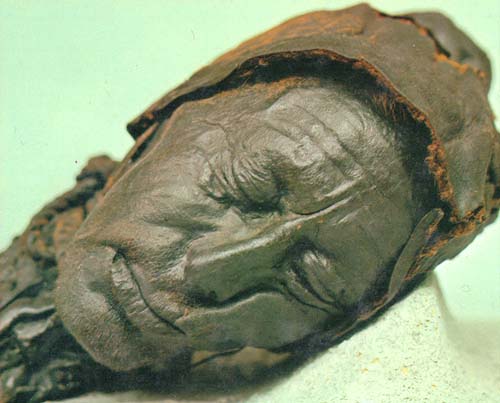 This week we have been learning about mummies!!! Mummies are
an interesting and controversial subject that has captured the imaginations of
people everywhere. They stir up strong responses; fear, awe, disgust,
fascination? For me they bring issues of ethics to the forefront because they force us to
confront how we conceptualize bodies as human or object or maybe even somewhere
in between. They bring us face to face with death in ways that less fleshy
remains perhaps do not.
This week we have been learning about mummies!!! Mummies are
an interesting and controversial subject that has captured the imaginations of
people everywhere. They stir up strong responses; fear, awe, disgust,
fascination? For me they bring issues of ethics to the forefront because they force us to
confront how we conceptualize bodies as human or object or maybe even somewhere
in between. They bring us face to face with death in ways that less fleshy
remains perhaps do not. I
like bones. Bones appear to be hard, unchanging objects
and I think we often conceptualize of them as objects because we do not
usually
witness the dynamic nature of live bone but only the static state of
dry-bones.
Last semester I took human osteology and I found, for the most part,
that I did
not have a problem dealing with human remains in this way. It was in an
educational environment emphasizing the importance of bodies for
anatomical
learning and scientific pursuit. Even the fetal or young skeletal
remains did
not evoke a large reaction for me. It wasn’t until I was studying
carpals
(wrist bones) one day that I really got the heebie-jeebies that fleshy
remains
give me from the get go. I was sorting through a bag of random carpal
bones
identifying them and when I was done I had eight of one type, six of
those from
one side of the body. That’s when it hit me. I had a small handful of
bones
each one no bigger than a cm long and they represented the remains of
six people. Could I really be holding the remains of six human lives in
one hand? Could
a human life filled with laughter and tears, hardships and victories
really
boil down to a centimeter long chunk of bone? That was the moment for me
when
these clean, dry, dis-articulated teaching bones made the shift in my
mind from
object to person.
I
like bones. Bones appear to be hard, unchanging objects
and I think we often conceptualize of them as objects because we do not
usually
witness the dynamic nature of live bone but only the static state of
dry-bones.
Last semester I took human osteology and I found, for the most part,
that I did
not have a problem dealing with human remains in this way. It was in an
educational environment emphasizing the importance of bodies for
anatomical
learning and scientific pursuit. Even the fetal or young skeletal
remains did
not evoke a large reaction for me. It wasn’t until I was studying
carpals
(wrist bones) one day that I really got the heebie-jeebies that fleshy
remains
give me from the get go. I was sorting through a bag of random carpal
bones
identifying them and when I was done I had eight of one type, six of
those from
one side of the body. That’s when it hit me. I had a small handful of
bones
each one no bigger than a cm long and they represented the remains of
six people. Could I really be holding the remains of six human lives in
one hand? Could
a human life filled with laughter and tears, hardships and victories
really
boil down to a centimeter long chunk of bone? That was the moment for me
when
these clean, dry, dis-articulated teaching bones made the shift in my
mind from
object to person. It wasn’t as if I didn’t conceptualize human remains as
human. When faced with a full skeleton I would clearly identify it as a person
and I would be eager to study their bones not so much because I find bones
themselves a remarkable tissue, which I certainly do, but because I would want to bring them back to
life, to know their story. As less and less of a complete body is present
however I think it is easier and easier to see objects rather than people. Unless
confronted with the discomfort of facing the magnitude of dead individuals as I
did, it is easy for your brain not to make the connection between a chunk of
bone and a living human. Personally I find fleshy bodies such as mummies much
harder to conceptually divorce from personhood although certainly not everybody
views mummified remains as people rather than objects.
It wasn’t as if I didn’t conceptualize human remains as
human. When faced with a full skeleton I would clearly identify it as a person
and I would be eager to study their bones not so much because I find bones
themselves a remarkable tissue, which I certainly do, but because I would want to bring them back to
life, to know their story. As less and less of a complete body is present
however I think it is easier and easier to see objects rather than people. Unless
confronted with the discomfort of facing the magnitude of dead individuals as I
did, it is easy for your brain not to make the connection between a chunk of
bone and a living human. Personally I find fleshy bodies such as mummies much
harder to conceptually divorce from personhood although certainly not everybody
views mummified remains as people rather than objects.  Where is the line for you? Is it mummies? Is it children? Is
it the recently deceased? It is an interesting question to consider as it is a
very complex and individual process but I think it gets you thinking about how
you conceptualize death and how that relates to issues of ethics when dealing
with human remains. Hopefully these pictures will stimulate you to consider where you
conceptually draw the line between person and object.
Where is the line for you? Is it mummies? Is it children? Is
it the recently deceased? It is an interesting question to consider as it is a
very complex and individual process but I think it gets you thinking about how
you conceptualize death and how that relates to issues of ethics when dealing
with human remains. Hopefully these pictures will stimulate you to consider where you
conceptually draw the line between person and object.
1. Lamp (http://store.graciousliving.com/brown-ballister-table-lamp.html), Chinchorro mummy (http://news.nationalgeographic.com/news/2012/08/pictures/120813-mummies-chinchorro-proceedings-desert-driest-chile/), John Cleese (http://masticateonthis.blogspot.ca/2010_09_01_archive.html)
2.Tollund Man, Denmark (http://www.mesh5.com/tension/febmarch/tollund1.htm)
3. Sedlec Ossuary, Czech Republic (http://twistedsifter.com/2012/08/sedlec-ossuary-bone-church-czech-republic/)
4. Bronze Age Wessex, UK (http://flickrhivemind.net/Tags/archaeology,ps/Interesting)
5. Rosalia Lombardo (http://www.ticinolive.ch/2013/01/23/rosalia-lombardo-bella-addormentata-nella-catacomba-dei-cappuccini-a-palermo/)
6. Capuchin Monastery mummies: Palermo, Sicily (http://travel.nationalgeographic.com/travel/countries/crypt-photos/
Subscribe to:
Comments (Atom)